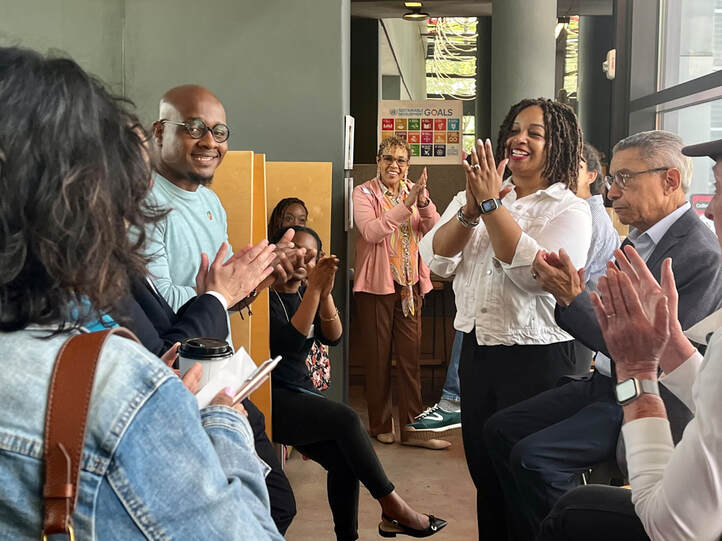
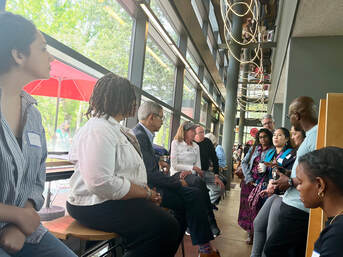
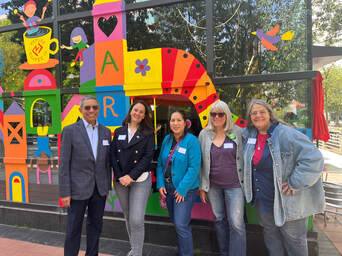
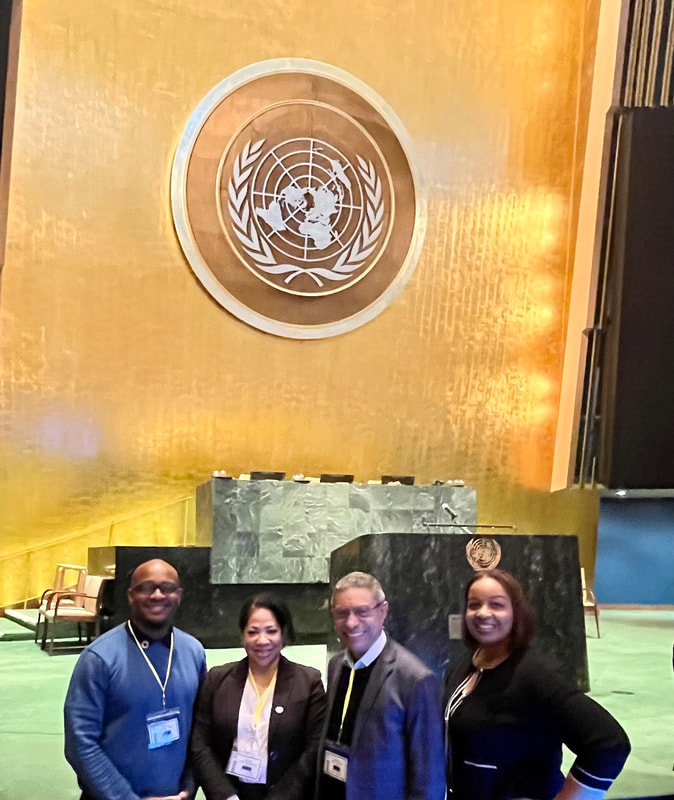
Tracy Gray, President, United Nations Association, Atlanta Chapter, delivers the keynote speech at the Fulton County Department of Community Development Youth Commission Service Awards Banquet, May 17, 2024. Photo courtesy of Mark Baucom, Sr. Public Affairs Officer, External Affairs, Fulton County Government.
By Tracy Gray, President
I was honored to be asked to be the Keynote Commencement Speaker for students from high schools across Fulton County with their parents, friends, relatives, caregivers, and elected officials. The theme of my speech was 'Youth Leadership and Global Citizenship: Shaping a Brighter Future Together'. I was asked by Reginald Crossley, Program Coordinator, to impart wisdom and guidance on Friday, May 17, to the prestigious Fulton County Department of Community Development Youth Commission Service Awards Banquet. I shared insights and experiences that I believe can inspire and guide them in their journey as future leaders and global citizens.
The event was a momentous occasion where we gathered in our nonpartisan collective spirit to honor the exceptional youth of Fulton County. The student achievements in community development, diversity, nonviolence, and humanity have not just been remarkable; they have been the pillars that have shaped our society. Their contributions, which we sincerely appreciate and recognize, have not gone unnoticed. We gathered to celebrate their profound impact, a testament to their exceptional leadership potential and the driving force behind a brighter future. Their achievements fill us with immense pride.
I was delighted to share this evening with Ikoie Norman, our VP of Fundraising and Membership at UNA-Atlanta, and Jennifer Borrero, UNA-Atlanta Global Goals Director, and dedicated member of the UNA-Atlanta, Eileen Gray. In my Keynote comments, I thanked the students for their active involvement in community development and unwavering commitment to embracing diversity, nonviolence, and humanity in all their endeavors. These are testaments to their leadership potential and the driving force behind our commitment to democracy and a brighter future for the American Dream.
I underscored the importance of civic engagement, a concept that may seem intangible but is the very essence of our society. It's not just about actively participating in the decisions that shape Fulton County, our communities, countries, and the world; it's a call to action for everyone. Their involvement, voice, and actions can and will make a difference. By engaging in civic activities, they can develop their leadership skills, gain a deeper understanding of societal issues, and contribute to positive change. I emphasized how, as current and future leaders, the high school and college youth have the potential to be the driving force of change.
The Service Awards Banquet was a chance to celebrate the Youth Commission Students and their remarkable achievements; I extended a warm and personal invitation to all the high school and college students. I encourage them to visit our website at UNA-ATL.org and consider joining for free as a member of our United Nations Association of the United States of America, Atlanta Chapter. Once they join, they will be part of a community that values their potential and contribution to our mission. Their voice matters, and we look forward to hearing it.
Becoming a member of the UNA-Atlanta will give them access to a network of like-minded individuals and leadership opportunities. Our chapter is actively involved in advocating for local and global cooperation, addressing pressing global issues, and promoting the values of the United Nations. Your involvement is crucial and can bring about significant change.
I highlighted why I advocate for the total funding of our share of the United Nations and Peacekeeping budget: I believe in the critical importance of the UN's mission today. The United Nations plays a crucial role in maintaining peace, promoting human rights, and addressing global challenges such as climate change and poverty. As a part of UNA-USA, the UNA-Atlanta Chapter is crucial in supporting this mission, advocating for local and global cooperation, and addressing pressing global issues.
One of our key initiatives is to educate and empower the next generation of global citizens.
I focused on our work with schools and universities to promote UN values and provide opportunities for young people to get involved in international affairs. For instance, the United Nations offers internships, volunteer programs, and leadership development initiatives, allowing students to contribute to our mission and gain valuable experience.
Since its inception, the Fulton County Youth Commission has worked diligently to impact policy, procedures, and legislation relating to children, youth, and families in Fulton County. Sponsored by the Fulton County Board of Commissioners and coordinated through the Youth and Community Services Division, the Fulton County Youth Commission is more than just a program; it's an exciting leadership and service-oriented opportunity that empowers young people like them to become knowledgeable and involved in the local governmental process. Their voice matters, and this is a platform for them to be heard.
Finally, I challenge the students, the young people in their circle, to vote and run for office when they are old enough. Their participation in the democratic process is not just a right; it's a responsibility. By voting and encouraging their friends and family members to vote, they are actively shaping the future of their community. Their involvement is vital to our communities' continued growth and improvement.
It was a night to celebrate their achievements, and I look forward to the students having an even more significant impact now and in the future. Their potential and dedication fill us with hope for a brighter future.
I thanked the students for their dedication, passion, and commitment to making Fulton County and our world a better place. I also expressed my gratitude to the parents, friends, relatives, caregivers, and elected officials for their support and participation in the event. My message is that together, we can achieve remarkable things.
I was honored to be asked to be the Keynote Commencement Speaker for students from high schools across Fulton County with their parents, friends, relatives, caregivers, and elected officials. The theme of my speech was 'Youth Leadership and Global Citizenship: Shaping a Brighter Future Together'. I was asked by Reginald Crossley, Program Coordinator, to impart wisdom and guidance on Friday, May 17, to the prestigious Fulton County Department of Community Development Youth Commission Service Awards Banquet. I shared insights and experiences that I believe can inspire and guide them in their journey as future leaders and global citizens.
The event was a momentous occasion where we gathered in our nonpartisan collective spirit to honor the exceptional youth of Fulton County. The student achievements in community development, diversity, nonviolence, and humanity have not just been remarkable; they have been the pillars that have shaped our society. Their contributions, which we sincerely appreciate and recognize, have not gone unnoticed. We gathered to celebrate their profound impact, a testament to their exceptional leadership potential and the driving force behind a brighter future. Their achievements fill us with immense pride.
I was delighted to share this evening with Ikoie Norman, our VP of Fundraising and Membership at UNA-Atlanta, and Jennifer Borrero, UNA-Atlanta Global Goals Director, and dedicated member of the UNA-Atlanta, Eileen Gray. In my Keynote comments, I thanked the students for their active involvement in community development and unwavering commitment to embracing diversity, nonviolence, and humanity in all their endeavors. These are testaments to their leadership potential and the driving force behind our commitment to democracy and a brighter future for the American Dream.
I underscored the importance of civic engagement, a concept that may seem intangible but is the very essence of our society. It's not just about actively participating in the decisions that shape Fulton County, our communities, countries, and the world; it's a call to action for everyone. Their involvement, voice, and actions can and will make a difference. By engaging in civic activities, they can develop their leadership skills, gain a deeper understanding of societal issues, and contribute to positive change. I emphasized how, as current and future leaders, the high school and college youth have the potential to be the driving force of change.
The Service Awards Banquet was a chance to celebrate the Youth Commission Students and their remarkable achievements; I extended a warm and personal invitation to all the high school and college students. I encourage them to visit our website at UNA-ATL.org and consider joining for free as a member of our United Nations Association of the United States of America, Atlanta Chapter. Once they join, they will be part of a community that values their potential and contribution to our mission. Their voice matters, and we look forward to hearing it.
Becoming a member of the UNA-Atlanta will give them access to a network of like-minded individuals and leadership opportunities. Our chapter is actively involved in advocating for local and global cooperation, addressing pressing global issues, and promoting the values of the United Nations. Your involvement is crucial and can bring about significant change.
I highlighted why I advocate for the total funding of our share of the United Nations and Peacekeeping budget: I believe in the critical importance of the UN's mission today. The United Nations plays a crucial role in maintaining peace, promoting human rights, and addressing global challenges such as climate change and poverty. As a part of UNA-USA, the UNA-Atlanta Chapter is crucial in supporting this mission, advocating for local and global cooperation, and addressing pressing global issues.
One of our key initiatives is to educate and empower the next generation of global citizens.
I focused on our work with schools and universities to promote UN values and provide opportunities for young people to get involved in international affairs. For instance, the United Nations offers internships, volunteer programs, and leadership development initiatives, allowing students to contribute to our mission and gain valuable experience.
Since its inception, the Fulton County Youth Commission has worked diligently to impact policy, procedures, and legislation relating to children, youth, and families in Fulton County. Sponsored by the Fulton County Board of Commissioners and coordinated through the Youth and Community Services Division, the Fulton County Youth Commission is more than just a program; it's an exciting leadership and service-oriented opportunity that empowers young people like them to become knowledgeable and involved in the local governmental process. Their voice matters, and this is a platform for them to be heard.
Finally, I challenge the students, the young people in their circle, to vote and run for office when they are old enough. Their participation in the democratic process is not just a right; it's a responsibility. By voting and encouraging their friends and family members to vote, they are actively shaping the future of their community. Their involvement is vital to our communities' continued growth and improvement.
It was a night to celebrate their achievements, and I look forward to the students having an even more significant impact now and in the future. Their potential and dedication fill us with hope for a brighter future.
I thanked the students for their dedication, passion, and commitment to making Fulton County and our world a better place. I also expressed my gratitude to the parents, friends, relatives, caregivers, and elected officials for their support and participation in the event. My message is that together, we can achieve remarkable things.

Reginald Crossley, Fulton County Youth Commission Coordinator (left), and Tracy Gray, President, United Nations Association, Atlanta Chapter, at the 2024 Fulton County Department of Community Development Youth Commission Service Awards Banquet at Loudermilk Conference Center, Atlanta, May 17. Photo courtesy of Mark Baucom, Sr. Public Affairs Officer, External Affairs, Fulton County Government.

Tracy Gray, President, United Nations Association, Atlanta Chapter, delivers the keynote speech, May 17. Photo courtesy of Mark Baucom, Sr. Public Affairs Officer, External Affairs, Fulton County Government.

Tracy Gray, President, United Nations Association, Atlanta Chapter, enjoys a discussion with chapter member Eileen Gray (center) and Ikoie Norman, Vice President of Fundraising and Membership. Photo courtesy of Mark Baucom, Sr. Public Affairs Officer, External Affairs, Fulton County Government.

Tracy Gray, President, United Nations Association, Atlanta Chapter, receives a Certificate of Appreciation for serving as the Keynote Commencement Speaker for the Fulton County Youth Commission 2024 Service Award Banquet, by Reginald Crossley, Program Coordinator, and Fulton County Board of Commissioners, District 4 Commissioner, Natalie Hall. Photo courtesy of Mark Baucom, Sr. Public Affairs Officer, External Affairs, Fulton County Government.